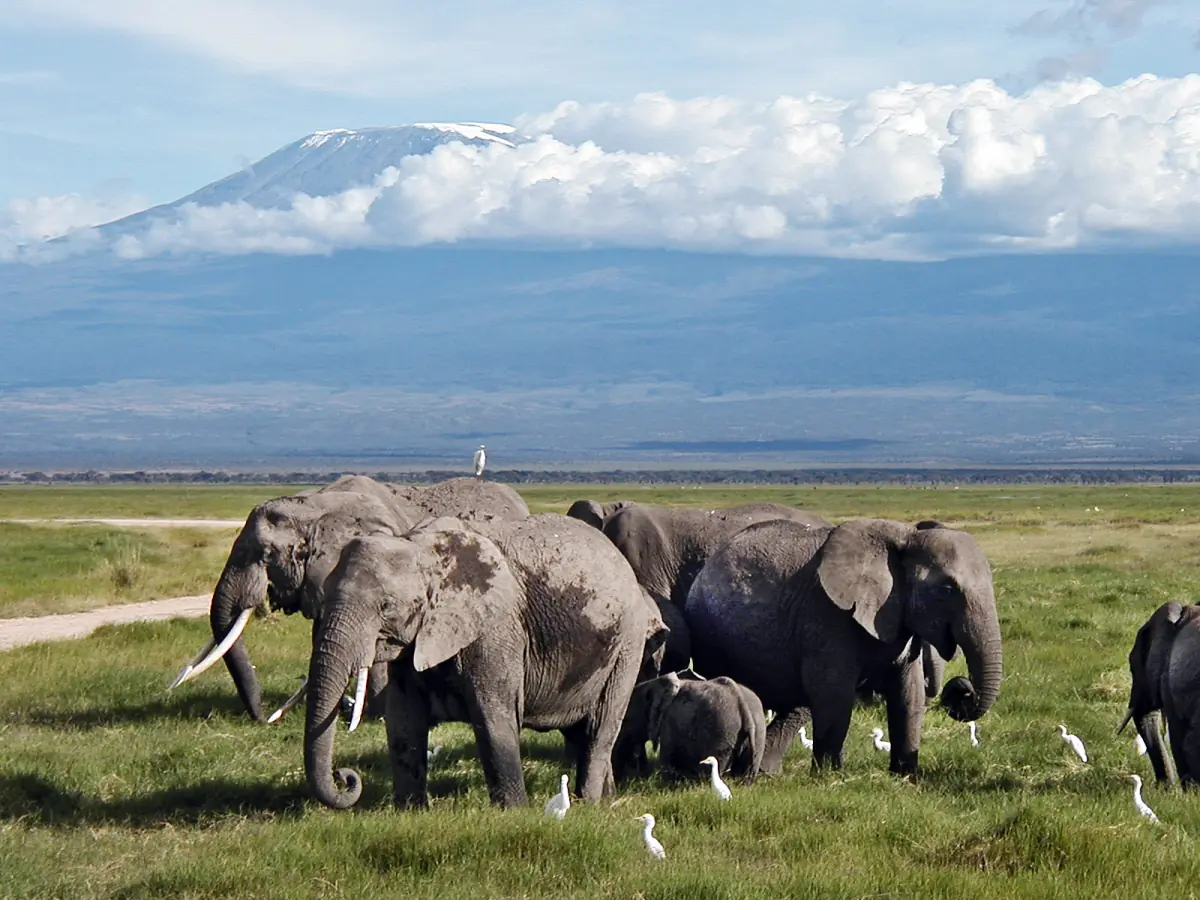
Amboseli elephants at a glance
Amboseli elephants live in family groups led by older females. Calves, aunts and sisters stay together, and several families often feed in the same swamp or grassland. Visitors come for this daily family life, for the long tusks of some bulls and for the mountain behind the herds. Good chances of seeing elephants are normal on a full game drive, but no sighting is promised on any day.
Few elephant populations in Africa have been followed as closely. A research project has recorded individual animals here since 1972, which is why guides and scientists can name families and track births and deaths over decades.
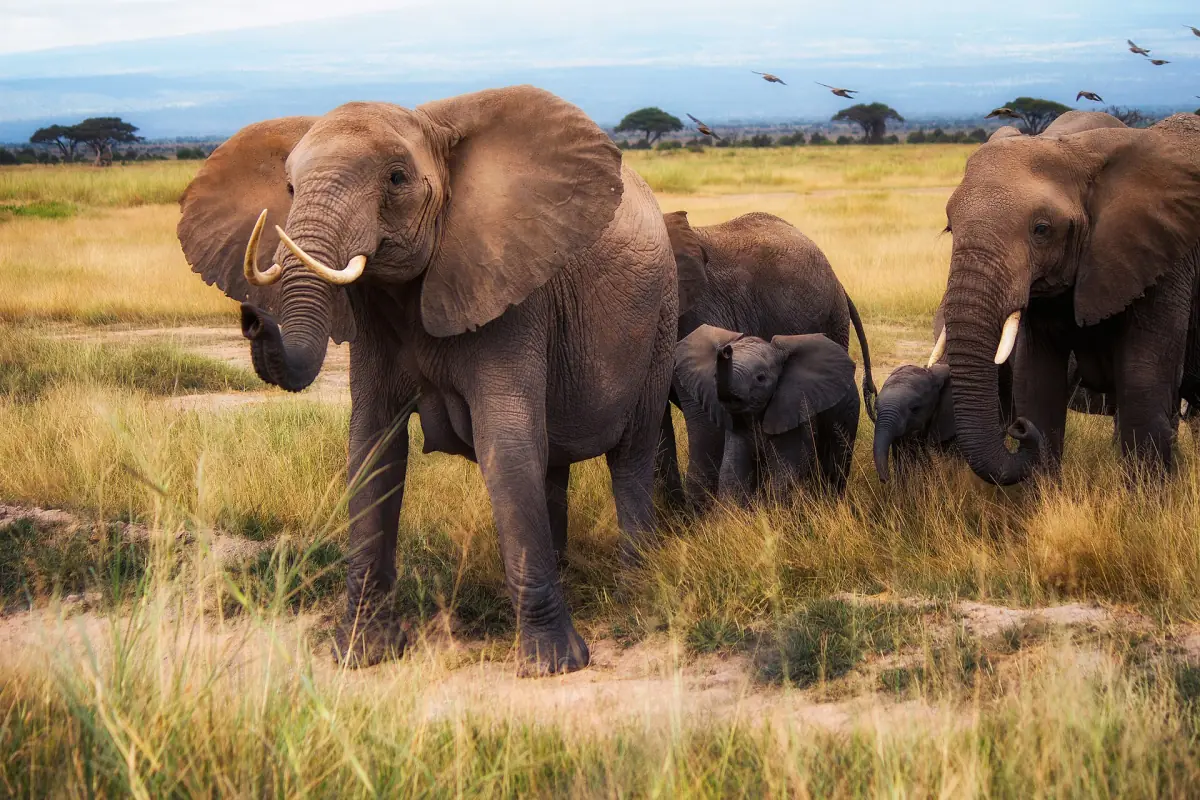
Where and how to watch elephants
Habitats, timing and what to expect.
Swamps and open grass
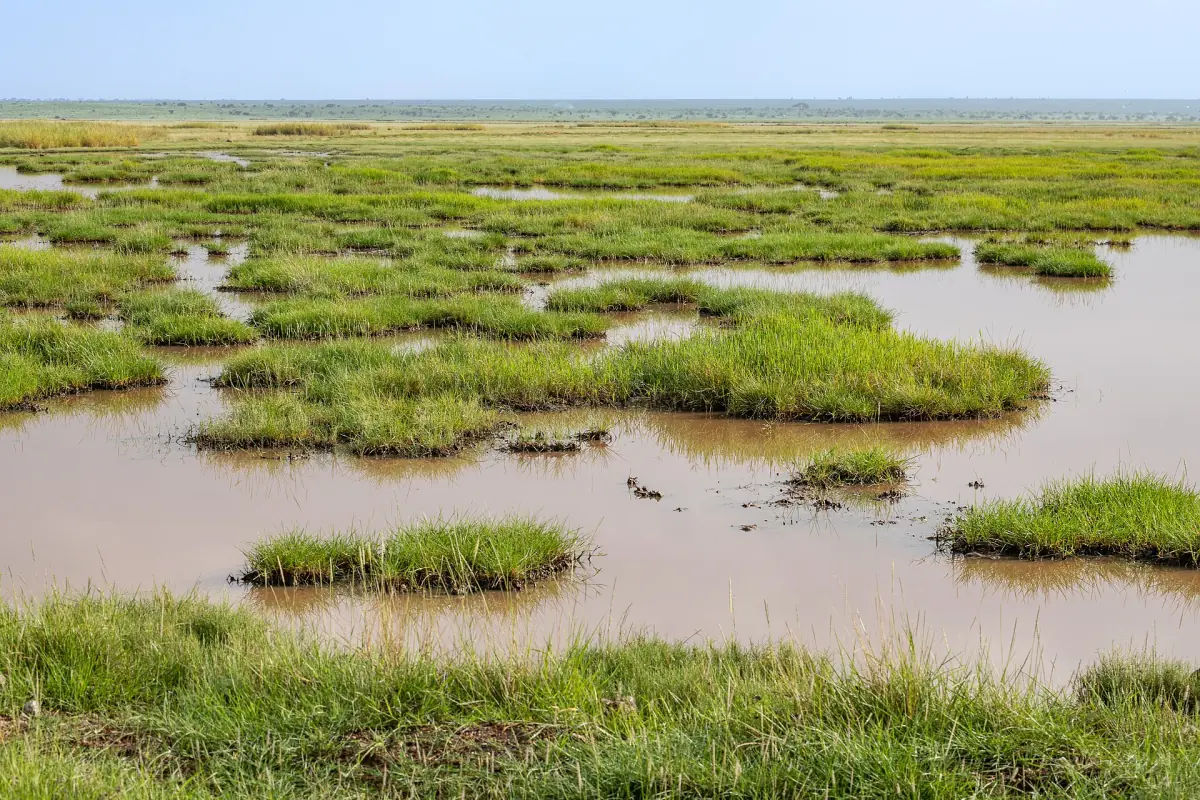
Water from underground springs feeds the swamps, which is why they stay green and draw herds. Elephants wading through shallow water with the mountain behind them are a classic scene. The swamps are described on the Lake Amboseli and swamps page.
A full day is better than a short loop
Herds do not stay in one place, so a full day gives you more time to find them than a quick loop. Most visitors book an Amboseli safari with a driver who knows the tracks and the herds. Day trips and longer programs are compared on the Amboseli tours page.
The mountain behind the herds
Elephants with Kilimanjaro in the background are the picture most people want. Cloud can hide the summit at any hour, so treat the view as a bonus. Tips for the photo spots are on the Kilimanjaro view page.
Our pick: more drives for the herds
Several game drives over three days give you more chances to find the elephant herds, though a sighting is never guaranteed.
Hand-picked tours, booked through GetYourGuide. Prices are indicative starting prices in US dollars (as of October 2026). Tap a tour for live availability and the current price in your currency.
Amboseli safaris and day trips
Game drives and multi-day safaris where elephant herds are a highlight, with live prices and availability.
The Amboseli Trust for Elephants and the research camp
Who studies the herds, and what visitors can and cannot do.
One long project
Cynthia Moss set up the Amboseli Elephant Research Project in 1972. The Amboseli Trust for Elephants became the legal body for the work in 2000. These are not two separate studies but one continuous record.
The camp is not an open attraction
The research camp has no free public entry. Limited talks are arranged in advance through the Nairobi office, usually at least 1 week ahead. A talk lasts about 1 hour and is given against a donation. Do not drive to the camp and expect to be let in.
If you want to learn more about the herds, ask your guide about family structure and recent births. A good driver can explain who leads a group and how the families relate to each other.
How many elephants live in Amboseli?
Different counts measure different things.
| Year | Figure | What it counts |
|---|---|---|
| 2021 | About 1,641 | The wider Amboseli ecosystem in a national elephant action plan |
| End of 2023 | 1,878 | Living individuals known to the research study |
| End of 2024 | 1,903 | Living individuals known to the research study |
| End of 2025 | 2,065 | Elephants identified and monitored by the research project, with more than 220 births that year |
The study numbers describe known individuals over time, not elephants standing inside the park boundary at one moment. The ecosystem reaches beyond the park and across the border into Tanzania. For most readers the research figures are the better guide to the size of the population, and the 2021 count is a different kind of number that should not be compared with them directly.
Drought, losses and recovery
The herds have been through a hard few years.
A severe drought hit the herds. The research project counts 179 elephant deaths in 2022, 67 in 2023 and 14 in 2024. Young calves and old elephants were hit hardest. Births fell behind because elephants carry a calf for a long time, so the effect shows up in the birth figures years later. The project counts 32 births in 2024 and more than 220 in 2025, which shows how quickly the picture can change.
These are numbers from past years. They are not a forecast for the current year.
Big tuskers: Tim and Craig
Famous bulls and what a visit can promise.
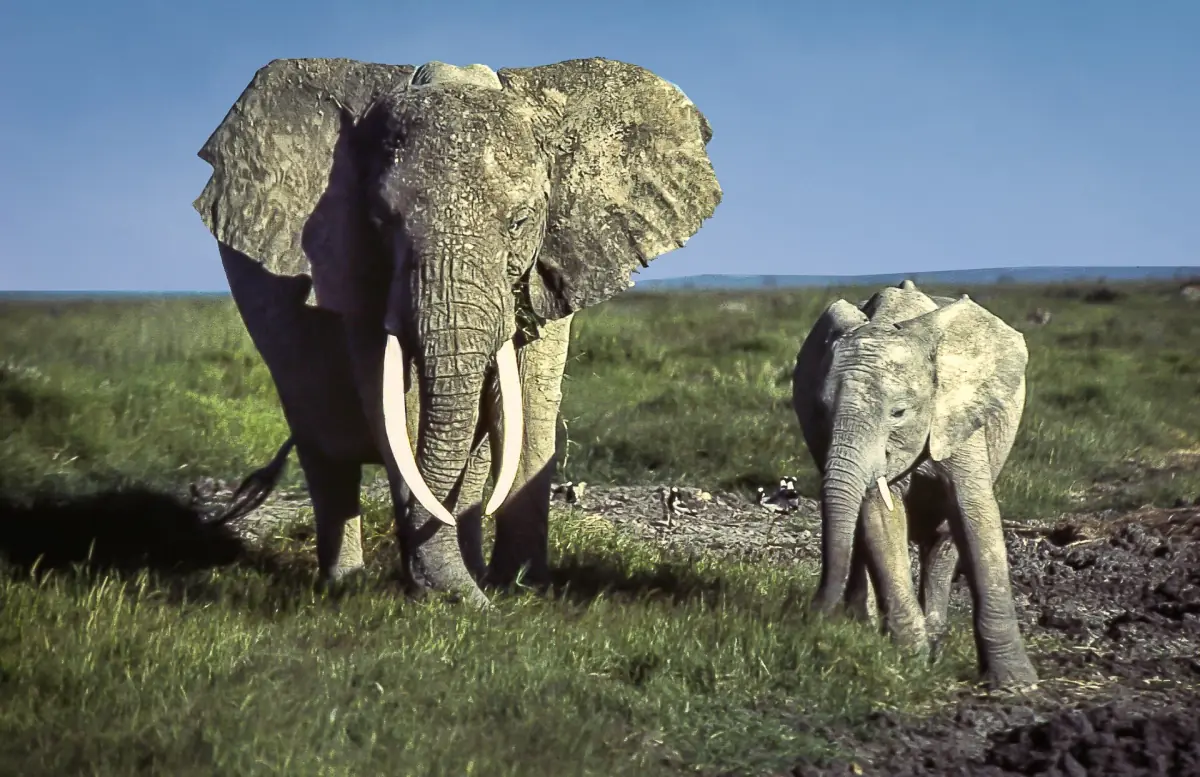
Amboseli became famous for bulls with very long tusks. Tim lived from 1969 to 2020. Craig, one of the best-known big tuskers in Amboseli, died in January 2026 at the age of 54. Neither can be seen today, so do not book a trip to meet a named bull.
Other bulls with large tusks still walk through the area, and sightings depend on the day and on luck. Ask your driver which bulls are about.
Rules for watching elephants
These park rules protect the animals and you.
Keep 20 m away
Stay at least 20 m from wild animals. If a herd walks toward your vehicle, let the driver back away calmly.
Stay on the tracks
Use existing tracks only. Off-road driving is not allowed, and the speed limit is 40 km/h.
Stay in the vehicle
Remain inside the vehicle except at designated places. Do not feed animals and do not sound the horn.
Gate hours
The park gates are open from 06:00 to 18:00, with an exception for guests staying overnight. Fees and payment are explained on the park fees page.
More about Amboseli
Continue planning your visit.
Amboseli elephants: frequently asked questions
Will I see elephants in Amboseli?
Chances are good on a full game drive, because the park has large resident herds. No sighting is guaranteed, and herds keep moving.
Can I still see Tim or Craig?
No. Tim lived from 1969 to 2020, and Craig died in January 2026 at the age of 54. Other big bulls live in the area, but no named bull can be promised.
How many elephants are there?
The research study knew of 1,903 living elephants at the end of 2024 and 2,065 monitored animals at the end of 2025. These are individuals known over time, not the number inside the park at one moment.
Can I visit the research camp?
Not as a drop-in visitor. Limited talks are arranged in advance through the Nairobi office, usually at least 1 week ahead, and last about 1 hour against a donation.
How close may I get to elephants?
Keep at least 20 m away, stay in your vehicle, keep to existing tracks and never feed or honk at animals.
Is this the official Amboseli website?
No. This is an independent travel guide. It is not run by the Kenya Wildlife Service, Kajiado County, the Amboseli Trust for Elephants or any safari operator.